
Raeden Provides Neoclouds with Data Center Space and Power at the Speed of Business

Neoclouds have emerged as the infrastructure pioneers of AI, providing innovative start-ups, individuals, and educators with a cloud-like model to utilize cost-prohibitive hardware for AI workloads on demand, such as high-performance GPUs. Due to the widespread adoption of generative AI, neolouds are experiencing rapid growth, but they can only scale as quickly as infrastructure allows. As neoclouds scale, they are encountering challenges with limited data center space and power, deployment complexity, and in some cases, data localization regulations that require servers to be located in the regions they serve. 


Neoclouds Face Unique Challenges

Due to the nature of AI and GPU technology, neoclouds require a distinct data center strategy from traditional data centers and cloud providers. While most corporate data centers require rack densities that are less than 30kW, and hyperscalers prefer to maintain an average around 30kW per rack, neoclouds must support rack densities of 100kW+. Higher-density racks require advanced cooling systems and thermal leakage management. AI workloads also need low-latency, high-performance networking to efficiently serve users as they train AI and use AI to complete tasks (inference). At the same time, neocloud providers must be able to strictly control their data center environment as users spin GPUs up and down in a matter of seconds.  

Given the unique nature of neocloud deployments, providers are facing infrastructure challenges that traditional cloud and technology companies have not. Massive greenfield data centers in remote locations are usually not ideal for neoclouds due to latency and delays for the delivery of new power and lack of customization for high-density deployments. At the same time, neoclouds require scalability of power and space. Raeden solves for these challenges by delivering to customer-specific requirements with a unique combination of real estate, data center operations, and infrastructure expertise. 

Access to Multiple Space & Power Options Near Population Centers

As neoclouds scale, they are encountering a lack of currently available power to meet their infrastructure and customer requirements, especially near population centers which are ideal for delivering low-latency AI services. As a hybrid real estate and data center owner/operations firm, Raeden was created to solve for space and power challenges. 

Raeden has vetted and prequalified thousands of sites for IT infrastructure and data center viability. We maintain technical data for thousands of locations, including how much power they have today, the size of existing transformers, weightloading specs, height clearance, and more. Because of our background and the groundwork we have laid, Raeden can provide a variety of viable site options for any neocloud provider based on their specific requirements at any given time. Many of our sites are near end users in tier 1, 2, and 3 cities with proximity to multiple fiber and internet providers. Some refer to these as “edge markets”. Many of our sites have latent power resources, meaning megawatts of power have already been dedicated to the sites, and they are not being consumed. Additionally, latent power can be available at a lower rate than new power. Raeden can also manage the procurement of new power, scope sites for energy generation, and can lead the build-out of scalable onsite power generation. Once a company chooses a site with Raeden, we manage all negotiations and contracts with property owners, providing the customer with a standard colocation MSA and a service order. 

Customer-Driven Solutions for Complex Deployments

For neoclouds, it’s important to work with a data center operator that can provide infrastructure support for new technologies as they become available. GPUs are evolving faster than any previous computing technology with exponential growth in processing power over the last two decades. Networking and cooling technologies are also continuously evolving to support them. Raeden addresses these needs by maintaining a flexible approach to building out data center sites. We select and build out sites according to customer specifications and not pre-determined facility specs to meet our own business goals. This allows us to meet unique technology requirements today and in the future.

As an IT infrastructure company with leadership that has built and operated data centers for some of the most innovative and high-growth technology firms of the 21st century, Raeden understands how IT infrastructure must adapt and modernize to accommodate change. Raeden sources and deploys power and cooling equipment at speed to support any type of technology, including:


Direct-to-Chip Liquid Cooling: A common and effective method involving attaching cold plates directly to heat-generating components. A coolant (often water or a specialized fluid) is circulated through the cold plates, absorbing heat at the source before being pumped away to a heat exchanger. This method can remove a significant percentage of the heat generated, often leaving a much smaller thermal load for the ambient air-cooling system to handle.

Rear-Door Heat Exchangers: These are liquid-to-air heat exchangers that are mounted on the back of server racks. As hot air exits the server, it passes through the heat exchanger, where it is cooled by the circulating liquid. This can be used in conjunction with traditional air cooling to handle higher-density racks without completely overhauling the data center’s infrastructure.

Immersion Cooling: This is the most extreme form of liquid cooling and is gaining traction for ultra-high-density applications. It involves the complete submersion of servers or individual components in a dielectric fluid. This fluid absorbs heat directly from all parts of the server, eliminating the need for fans and other air-cooling components. Immersion cooling can be either single-phase (the fluid remains a liquid) or two-phase (the fluid boils and vaporizes, then is re-condensed to repeat the cycle).
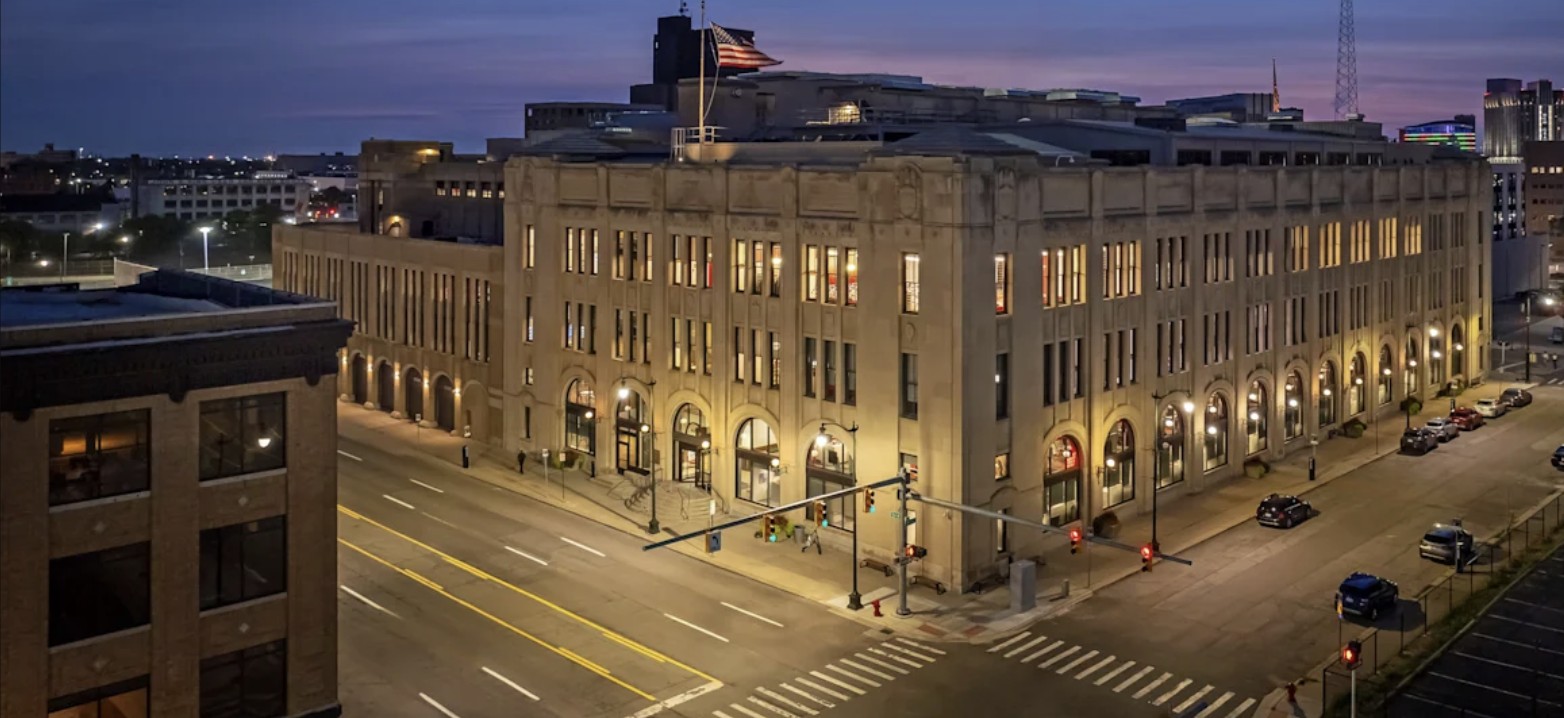
Adaptive Reuse: A Faster, More Sustainable Data Center Solution for the AI Revolution

Adoption of generative AI is faster than it has been with any previous technology. Last year there were 365 billion searches conducted on ChatGPT, two years after launching. It took 11 years for this many searches to be conducted using Google’s search engine. Because adoption is so fast, companies need to move quicker than ever before to meet user demand and stay competitive. But ChatGPT and other AI technologies can only scale as fast as the infrastructure behind them. New data centers usually take a year or two to build, and processing new requests for utility power and sourcing the necessary equipment to operate new data centers can take even longer.

The widespread adoption of artificial intelligence (AI) technologies demands decentralized computing near internet resources to efficiently serve users, which necessitates innovative approaches to infrastructure development. Adaptive reuse, the strategic repurposing of existing building space and infrastructure, presents a compelling solution for data center development. If done well, this approach accelerates time-to-market, achieves substantial cost efficiencies, and contributes to meeting corporate sustainability goals. When adaptive reuse is planned and implemented by experienced data center developers and operators, existing spaces can meet current and future demands for modern computing.

Meeting Modern Data Center Requirements

Demands from power, network, and data center infrastructure are increasingly complex with the adoption of high-density GPU racks. GPU manufacturers and neocloud providers are continuously innovating, increasing processing power while lowering the cost of acquisition. The industry has seen a massive increase in rack densities in just the last five years. Pre-AI, rack densities typically fell between 5 and 20kW. The average rack density in 2018 was around 7.3kW. While average enterprise IT rack densities still fall below 20kW today, we often see requests for 130kW+ per rack to support GPU deployments. These types of deployments support AI training and inference, and they demand advanced cooling systems, thermal leakage management, and meticulous environmental controls. 

The requirements for modern data centers present a dual challenge: enabling increasingly high-performance supercomputing while maintaining precise control. These technologies demand vast power and cooling capacities, implying large-scale infrastructure, yet simultaneously require meticulous environmental controls, robust security, and redundant critical systems in smaller spaces. The success of adaptive reuse in this sector hinges on the ability of data center developers and operators to meet the demands of modern infrastructure within existing, often older, structures. This is a complex ask that necessitates advanced engineering and decades of data center operations experience to achieve. 

Three Key Benefits of Adaptive Reuse

Speed to Market

One of the most compelling advantages of adaptive reuse for data centers is the significant acceleration of deployment timelines. In a rapidly expanding global digital economy prone to disruptions, the ability to bring computing capacity online swiftly is a critical competitive advantage. While traditional ground-up construction can often take two years, converting an existing building can be accomplished in significantly less time. Raeden can do it in six months. Modernizing existing structures can be faster for several reasons: existing utility power, reduced dependence on supply chains, and reduced capital outlay. 

ICF predicts a 25% increase in power demand from 2023 to 2030. The demand for new power, particularly from data center developers, has resulted in a backlog of new power requests, causing years-long processing delays. There are also limited means of transmitting new power with our current grid system, and new infrastructure will be required to distribute it.  With adaptive reuse on the other hand, Raeden leverages latent power that has already been allocated to serve existing structures. We also utilize the bones of existing structures and existing power and mechanical equipment as it meets customer requirements. This substantially reduces delays associated with new material procurement and complex construction processes. 

Customer-Led Design

Unlike traditional colocation data center companies, Raeden can adapt existing facilities to meet an anchor tenant’s exact business needs. Finding acceptable space for liquid-to-chip and other specialized deployments in a forced-air environment is difficult. Doing so without disrupting or exposing existing tenants is even more challenging. In the rare circumstances where a customer-led solution was pursued, the process often required months of back and forth to scope, more to procure a location, and many more securing power, equipment, and contractors to execute the build.  It was such a daunting task that pursuing a specific architecture has only been reserved for hyperscalers and even then, they often opted to self-perform.  Simply put, the incumbent providers have been strategically positioned away from such customer-driven solutions.

Raeden offers a very different approach than what has been the norm in securing data center space. With adaptive reuse, Raeden helps clients avoid these problems by taking their challenges into account at the start instead of square pegging a round hole. Businesses don’t need to compromise on performance, location, or architecture in order to fit into an adapted environment. 

Prime Locations

Traditional data centers were often built on remote, inexpensive land. Adaptive reuse, by utilizing existing urban and suburban structures, inherently promotes urban integration. This represents a strategic shift from isolated “big boxes” to facilities embedded within the urban fabric. Unlike sprawling big box data centers, existing buildings allow data centers to blend in with their surroundings. This offers a subtle yet important security and operational advantage, contributing to the discretion that can be challenging for new builds in highly visible locations.

Many older industrial and commercial buildings that are perfect candidates for adaptive reuse are located in highly desirable urban or suburban areas, including urban centers. Raeden’s real estate team often finds viable sites in highly sought-after urban areas when other site selection teams can’t. These locations offer the strategic advantages of dense network infrastructure, latent power resources, proximity to users, and improved access to skilled labor. This proximity is crucial for AI inference, enhancing performance and user experience. Reduction in latency also results in cost cuts by minimizing the need for long-distance data routing. 

Why Raeden is Uniquely Positioned to Deliver

While Raeden does build greenfield data centers where it makes sense, our bread and butter is adaptive reuse, and the company was founded for this purpose. Raeden’s experts fully understand how to implement data center infrastructure to make modern technologies work efficiently and cost-effectively in pre-existing buildings. We also fully understand how to find and assess sites for data center use. This is because Raeden is a hybrid real estate and data center operations firm. Raeden was founded in 2019 by Jason Green, who spent decades building and operating data centers across the country and around the world before starting Raeden, and Kari Schrader, an expert in commercial real estate who previously worked at CIM, managing $2 billion in sales and acquisitions. Shortly after founding Raeden, they began working with Rick Talavera, an expert in building automation software with a background in the data center industry, to develop a unique property search application specifically for the purpose of assessing infrastructure sites. Our application, Marketplace, now contains data on 30,000 sites across the U.S. and around the world.

Under these three experts, Raeden has built out teams of high-performing experts in their respective areas capable of meeting the infrastructure demands of modern technology at speed. We have the experience, the know-how, and networks of relationships across public and private sectors to bring complex projects to fruition on strict timelines. Rapid technology deployment enables companies to capture market share, respond immediately to the demand for AI inference and cloud services, and generate revenue sooner, and Raeden is the data center partner to deliver.

Blog Test All the Things

Lorem ipsum dolor sit amet, consectetur adipiscing elit. Nam porttitor sollicitudin ligula sit amet convallis. Vivamus et urna velit. Quisque vestibulum commodo turpis, ut mollis eros pretium sit amet. Proin et vehicula nunc. Quisque id auctor ipsum. Maecenas blandit venenatis neque nec imperdiet. Nam volutpat ultrices metus non placerat. In hac habitasse platea dictumst. Donec bibendum quam sit amet purus accumsan volutpat.

Maecenas diam velit, ullamcorper sit amet arcu in, facilisis interdum orci. Proin dictum sed est ut porta. Nam hendrerit magna sapien. Phasellus ut nibh consectetur odio luctus commodo quis et velit. Aliquam erat volutpat. Aliquam libero risus, maximus pharetra augue vel, interdum efficitur mauris. Morbi mollis leo eget tellus eleifend lacinia non eu risus. Quisque eu arcu pretium, pellentesque ligula non, finibus mi. Aliquam consectetur, felis ac congue elementum, dui dui blandit tortor, ac viverra nunc urna id nisi.

Cras tempor pharetra luctus. Nullam vel augue at sapien ultrices feugiat sed vel nisl. Morbi quam nisl, hendrerit at pellentesque a, viverra in leo. Phasellus interdum metus id nisi mollis, in dictum risus venenatis. Mauris a congue orci, nec vehicula arcu. Pellentesque et neque ac nisi aliquam aliquet. Vestibulum nec maximus purus. Integer pulvinar vitae odio sit amet congue.

Phasellus at tortor id ex placerat tincidunt et vitae risus. Praesent interdum dui odio, at pellentesque lectus posuere at. Nam ultricies nulla sit amet tellus luctus aliquam. Nullam sapien neque, aliquam id tellus ut, blandit pretium nunc. Curabitur dolor est, imperdiet vel condimentum id, condimentum ut nibh. Sed cursus nisl non nibh tristique venenatis. Maecenas id iaculis lectus. Proin in tortor enim. Etiam fermentum odio eu massa tempus, ut ultricies felis ornare. Vestibulum auctor pellentesque arcu, ut aliquam mauris consequat id. Aliquam erat volutpat. Sed egestas, eros vitae pharetra aliquet, nulla nulla condimentum turpis, sit amet fringilla mi dui et ante. Maecenas faucibus venenatis bibendum. Integer et euismod quam. Morbi viverra leo magna, ac volutpat orci facilisis nec. Nulla a eleifend quam.

Cras vehicula odio luctus, pellentesque elit ut, tristique arcu. Nulla sed lorem odio. Nam sed quam at sem aliquam fermentum. Integer in nunc nec ex laoreet lobortis. Praesent nec quam ut ex lobortis imperdiet. Aliquam tortor nunc, mattis venenatis facilisis in, lacinia sit amet ante. Fusce maximus mauris ut metus fringilla ultricies eget ac elit. Aenean dolor risus, facilisis vitae sodales nec, tempor sit amet metus. Fusce laoreet sem ex, nec iaculis erat rutrum at. Pellentesque vestibulum pulvinar arcu, in semper turpis faucibus quis. Sed et interdum quam, eget viverra massa. Etiam eget suscipit eros, in vulputate leo. Phasellus dictum dui sed arcu efficitur, non scelerisque neque dapibus. Morbi tristique enim nunc, vel rhoncus orci pharetra a. Aenean congue tortor felis, ac hendrerit tortor ullamcorper eget. In tempor imperdiet arcu, eget porttitor dolor auctor tincidunt.

Lorem ipsum dolor sit amet, consectetur adipiscing elit. Nam porttitor sollicitudin ligula sit amet convallis. Vivamus et urna velit. Quisque vestibulum commodo turpis, ut mollis eros pretium sit amet. Proin et vehicula nunc. Quisque id auctor ipsum. Maecenas blandit venenatis neque nec imperdiet. Nam volutpat ultrices metus non placerat. In hac habitasse platea dictumst. Donec bibendum quam sit amet purus accumsan volutpat.

Maecenas diam velit, ullamcorper sit amet arcu in, facilisis interdum orci. Proin dictum sed est ut porta. Nam hendrerit magna sapien. Phasellus ut nibh consectetur odio luctus commodo quis et velit. Aliquam erat volutpat. Aliquam libero risus, maximus pharetra augue vel, interdum efficitur mauris. Morbi mollis leo eget tellus eleifend lacinia non eu risus. Quisque eu arcu pretium, pellentesque ligula non, finibus mi. Aliquam consectetur, felis ac congue elementum, dui dui blandit tortor, ac viverra nunc urna id nisi.

Cras tempor pharetra luctus. Nullam vel augue at sapien ultrices feugiat sed vel nisl. Morbi quam nisl, hendrerit at pellentesque a, viverra in leo. Phasellus interdum metus id nisi mollis, in dictum risus venenatis. Mauris a congue orci, nec vehicula arcu. Pellentesque et neque ac nisi aliquam aliquet. Vestibulum nec maximus purus. Integer pulvinar vitae odio sit amet congue.

Image of a bilding
this is the caption or by line for each image. You can even link stuff

“Attitude is a little thing that makes a big difference”

Winston Churchill
  • Lorem ipsum dolor sit amet, consectetuer adipiscing elit.
  • Aliquam tincidunt mauris eu risus.
  • Vestibulum auctor dapibus neque.
  • Nunc dignissim risus id metus.
  • Cras ornare tristique elit.
  • Vivamus vestibulum ntulla nec ante.
  • Praesent placerat risus quis eros.
  • Fusce pellentesque suscipit nibh.
  • Integer vitae libero ac risus egestas placerat.
  • Vestibulum commodo felis quis tortor.
  • Ut aliquam sollicitudin leo.
  • Cras iaculis ultricies nulla.
  • Donec quis dui at dolor tempor interdum.

Get in touch

This is just to go right to the contact page that they wanted really really simple so just wanted to show it

Simple Contact Form